Everyone’s Request
Everyone asks you to respect the earth – Al Gore, President Obama, Brad Pitt, even me!
Everyday, humans throw away a ton of sewage that harm multiple ecosystems and create giant public health concerns. This not only affects our planet, but everyone on the globe. This is a request from everyone to everyone:
Don’t throw any type of sewage into the sewer system, stand up for political issues that support a good clean system, and donate any chance you can to charities that clean water. The world thanks you!

My Travels: Part of the Sewer System
During this semester, throughout my travels, I have seem various forms of pipes and drains, which play a main role in the sewer system. Here is a collection of some of the drainage systems I’ve seen:

Stones on the Road in Pompeii
- Pompeii: These stones that you see to the side were used for pedestrians to cross the street. This is because the drains from the homes would drain onto the roads. As a consequence, the roads would be filled with various waste waters. The stones and sides of the street were roughly 30 centimeters from the ground. It took some effort to get on and off them.
- Brescia: I don’t remember the name if this area, but it was close by to the Brescia Castle. I noticed the wall had small holes. When I look closer, I realized they were pipes that would carry water from higher ground and drain them into the bottom road. I believe it was mainly used for rainwater.
- Blarney Castle, Ireland: The walls of the castle had a series of small pipes carved into it that would also bring water from the top of the castle down. I believe it was also mainly used for rainwater.

Brescia Wall with Drains
These few experiences showed me the variety in Europe. It’s rather ingenious how so many civilizations and people have figured out how to create, what I consider, one of the most important things ever. Many people get nauseous or sick when they hear about sewage!
The Underground World: Sewer Inspector
Although I am not interested in becoming a sewer inspector, I got quite curious on what a sewer inspector’s roles are. I got some time with Felix, a senior supervisor from my hometown. He sent me this link to give me a brief overview of the sewer inspection process. Take a look:
As you can see, the people who work in this field are quite bold. The average annual salary is $34,960, although some inspectors may get paid as much as $61,058.
Q: How long have you been in this field?
A: I’ve been working in sewers for about 20 years.
Q: What exactly is a sewer inspection?
A: A sewer inspection is basically the process of looking for cracks within the walls of the tunnels and making sure everything is in working order. Some tunnels are quite old, so at least annual inspections are needed. Sewer inspections sort of give us a better idea on whether the tunnels will continue to hold up. We don’t want the street above collapsing in on the tunnel.
Q: What are inside the tunnels?
A: A lot of cockroaches, runwater (water that is used everyday), some rats, and of course, human waste. Sometimes, some sewer inspectors will find alligators! I’m just kidding, there are none, at least not here.
Q: What’s the technology in sewer inspection like?
A: Like the Internet, technology is growing in this field. Some cities with more modern tunnels are may opt to use robot-like machines to check the piping. Older cities have to rely on human inspection, since robots don’t give us a full view on the tunnel. But technology is improving.
Q: How do you deal with the smells of the sewer?
A: You just get use to it. There’s enough oxygen below so inspectors don’t suffocate.
So, do you want to become a sewer inspector?
The Unexpected: Sewer Tours
Sewers are more than meets the eye. Surprisingly, there are many cities throughout Europe that give sewer tours! The top on the list is Paris, followed by Brussels, Vienna, Prague, Rome, Brighton, Barcelona, Hamburg, Trier and Emmen. I have not gotten the opportunity to experience them, but you should take a look for the next time you travel. Experience another world!
Brief Tour
Paris: For 5 euros, the Musée des égouts de Paris. The path is roughly 500 meters of the sewage and drainage system. You will get to see actual Parisian sewage. The path gives you a good view into the history and development of the system. Similarly to the previous post Interesting Things Found Below, Paris gets many items that are dropped in the sewer. They offer a free service on the retrieval of such items! This sewage system is by far the most famous in Paris. Also, be sure check under your feet for manhole art as you walk throughout Paris!

Paris Sewer
Here are a list of other sewer destinations you may visit, if Paris isn’t in your travel plans:
- Brussels, Belgium
- Vienna, Austria
- Prague, Czech Republic
- Rome, Italy
- Brighton, England
- Barcelona, Spain
- Hamburg, Germany
- Trier, Germany
- Emmen, Netherlands
Ooze gives all the information you need to plan and explore this odd world. Take a look!
Toilets: Read all about ’em!

Golden Toilet
Lavatory, loo, WC, CR, khazi, dunny, outhouse, privy, netty, latrine.. the list is endless. All these are slang for toilet. The toilet has gone quite a long ways since its creation, as noted in the previous post. Since its creation and partnership with the sewage system, various designs have been created for the toilet.
Main toilet designs:
- Flush: typical toilet; in most modern countries.
- Squat: self-explanatory; majority of world uses this toilet.
- Urinal: male and female, although the female version has never gained popularity.
Specialty toilet designs:
- Toilet with built-in bidet: self-cleaning!
- Chemical toilet: no-flush, still toilet; chemicals are used to deodorize the toilet.
- Dry toilet: no water used for flushing
- Head: a toilet on a boat, which has a pump to bring cleaning seawater in and pump waste overboard or into a holding tank.
Public toilets have been a fortunate invention. A few common forms of public toilets are port-o-potties, high-tech toilets, outhouses and regular toilets. Many people have capitalized on toilet usage, charging from a range of 20 cents to 1.50 euro!
Personal Experience – Favorite Public Toilet

The Free Parisian Public Toilet
In Paris, around the Montmartre and Eiffel Tower area, there are several high tech, free public bathrooms that caught my eye. When I first approached them, I was very weary of how they worked. I imagined a unsanitary, smelly, unflushable restroom. But to my surprise, it was the complete opposite! I waited in a long line (as you see in the image) to use the restroom. After the person before used the restroom, I had to wait for the restroom to clean itself – yes, clean itself. That amazed me. The whole restroom was sprayed and sanitized after each person. The experience inside the restroom was also pleasant for a public restroom!
Most Interesting Public Toilet
Toilets have gone from a simple disposal system to a whole new world of design!
Where the Sewage System Begins: The Toilet
Imagine: You’ve had 2 espressos, a liters of water, and a cup of peach tea. You’re walking down the street, and suddenly, your bladder lets out a scream. Immediately, you look around for a toilet. All the restrooms around charge at least 50 cents, but you have no change. You run to the restroom anyway, hoping a kind stranger will give you some spare change. Once you arrive, there’s no one to be found. The attendant is strict and won’t allow you to use the rest room, despite all your begging. Desperate, you run over to some bushes. Within a few minutes, you are relieved, and can happily continue your day. Good thing the police didn’t see your behavior, or he would have ticketed you.
So who do you have to thank for the toilet, so you don’t have to use a bush?
The Beginnings

Mohenjo-daro Toilet
During the “Age of Cleanliness” circa 3000 B.C., toilet and sewers were invented. Mohenjo-Daro was noted to be the most toilet-advanced, similar to modern day toilets. The toilets contained vertical chutes that transferred waste into drains. There were a few other areas close to the present day Pakistan area that had running water. The sewage system has evolved since then, but nonetheless, it was quite an impressive feat for the time. The wealthy were the only ones who could afford this system.
King Crete of Minos is recorded to have owned the first ever flushing toilet, but many people were not as lucky as him. Many people did not have this luxury. Many people had to simply dig their own holes and cover them back up.
In Rome, the toilets were elevated to raise them to open sewers. Most of the world continued to dig holes or use squat toilets, in which users squat to use the restroom.
Modern Times
Until the 19th century, many people did not have the pleasure of a flushing toilet. The flushing toilet was invented in 1596 by John Harington, but it was not widely used until later.
In 1775, Alexander Cummings patented the flushing toilet.
In the present day, you have companies such as Toto, Kohler, and American Standard to thank for toilets!
Purpose and Design: Manhole Covers
Manhole covers are the circle covers you see on the ground. A side from being extremely round, heavy and a tint of copper, engineers have created manhole covers have been made for several purposes.
- Inspection and cleaning. They are made at a size there people can easily enter and exit. Inspection and cleaning are crucial in good sanitation processes.
- Ventilation.People do not want sewers to release the sewer aromas into their homes, so the manhole covers serve as a way to ventilate air before it reaches people’s homes. The amount of holes in manholes, however, has decreased over time.
- Cost. Sewer passage ways used to be made to the side of the sewers so manhole covers would not be needed, but this proved to be quite expensive.
- Safety. If the hole were left uncovered, much havoc can be caused. Take for example, Alexa Longueira, a 15-year-old from Staten Island. While walking on the street and texting, Alexa failed to notice her surroundings and fell into an uncovered manhole. She suffered a few minor injuries and a lost sneaker. This case may be a more subtle, but imagine, if the manholes were uncovered, what other damages may be done!
- Design. Manhole covers used to be solely for the above reasons, but in more modern times, they have become pieces of art!

Manhole cover design in Seattle
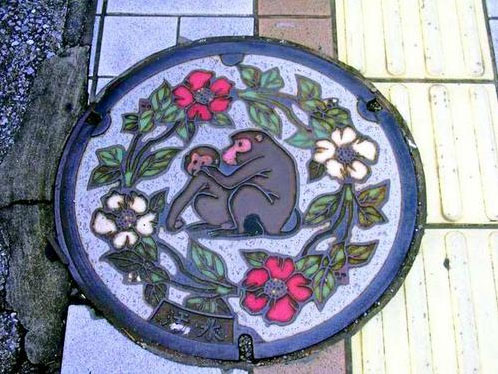
Japanese Manhole Cover
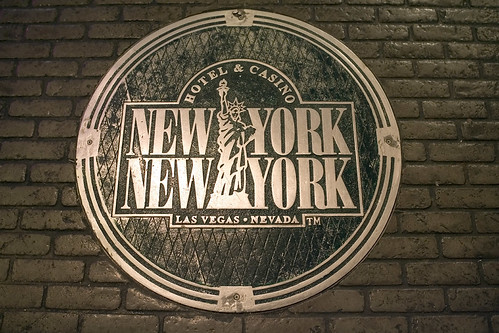
New York Manhole Cover

Palo Alto Manhole Cover
In summary, manhole covers provide a safe, beautiful cost-effective way for the government to keep part of the sanitation system clean.
Interesting Things Found Below
Every day, people around the world dispose of personal items multiple ways. Sometimes they dispose it on purpose, sometimes, all by accident. Thankfully, sewer designers and plumbing and draining services, such as Robo-Rooter, were somehow about to foresee the future and help people at least find items they may lose in the sewer. In New York sewers, items such as rags, soiled paper towels, condoms, rubber gloves, MetroCards, dental floss and tampon applicator are normally found. However, there have been much more “interesting” items found.

Dirty dentures? An elderly man in South Carolina called in to report he dropped his dentures into the sewer. After the technicians of Roto-Rooter retrieved the item, he happily cleaned them and used them again.
Prisoner pants? A pair of orange prisoner pants were found after a clog was reported by the Ottawa County Jail. The prisoner that clogged the pants down the drain was sentenced another 30 days in prison. He would have released in 4 days after he clogged the toilet.

Diamonds? A woman accidentally flushed her $7,000 diamond engagement ring down the toilet. The husband was quite disappointed when his wife tipped the plumber $20 for his services.
Grand Prize Winner for “Most Interesting”
A German ended her troubled marriage in one of the most brutal ways – chopping her husband up into pieces and flushing him down the toilet. The children called the police after their `father went missing before Christmas. The wife had tried to kill him several times before, but the husband never called in the attempts.
On the night of the murder, neighbors reported hearing toilets flush continuously.
What have you accidentally flushed down the toilet?
Create Your Own Water Filter!
By creating a water filter, you will get firsthand view on how the water filtration process works.
The resulting water may be used to water household plants and other daily activities. One if there are nochemical containments present, then the water may be drunk. Otherwise, do not drink the water!!
So, how do you build a water filter using everyday items?
Items Required
- Clay pot (32 to 34 inches tall) or similar container
- Screwdriver
- Hammer
- Single 30 inch flexible pipe, 1 inch in diameter
- Bricks
- Washed sand
- Potato-sized and small wash stones
- Washed bean-size and seed-size gravel
- Cloth
- Cement or similar material
- Container for water
Steps
- Create a hole on the side of the container using a screwdriver and hammer 20 inches from the ground.
- Fit the 30 inch flexible pipe into the hole. One end of the pipe should touch the bottom of the inside of the container. The other end should stick out. Hold the pipe in place using the cement.
- Place the potato-sized washed stones on the bottom of the container, creating a single layer of stones.
- Place the small washed stones in between the potato-sized wash stones. Place enough to prevent the next layer of gravel from falling through, blocking the gaps, or clogging the pipe.
- Place a thin layer of the washed bean-size gravel over the later of the small washed stones.
- Place a think layer of the washed seed-size gravel over the washed bean-size gravel. The layers in step 5 and 6 should not exceed 4 inches in thickness.
- Place the washed sand 5 inches below the level where the pipe goes through the side of the container.
- Place the storage container next to the container. The pipe should bend so that the water will run into the container.

The container is ready for use. Dirty, non-chemical water may be placed into the top of this creation. After the water is filtered, you may drink it (if it is surely uncontaminated from chemicals).
This process is taught to many people in third world countries, where clean water is rare. It helps purify some of the water to make it more drinkable than it is. This process is a condensed version of similar steps used in how the sewage system works.
Clean water has been an ongoing debate within all countries – developed to the undeveloped. Even with the new technology to filter toilet water to drinkable water, many countries do not have the funds to obtain the technology.
Charity: Water sums up the issue in an short, impactful video:
Many organizations have stepped forward to help this major issue. Volunteer-based, non-profit organization Global Water, founded by former U.S. Ambassador John McDonald and Dr. Peter Bourne, strives to provide permanent solutions to clean water for villages around the world.
Starbucks also runs their Ethos Water campaign. For each bottle of Ethos water purchased, 5 cents will go towards the fund. So far, $6 million have been granted towards the fund.
An additional way organizations are helping people access clean water with a pill that makes water drinkable. It recreates the sewage treatment system in one small package. Organizations, such as CoverGirl, is donating a one-time $500,000 towards the cause. Their campaign is ongoing, so be sure to check it out and see what you can do!

